
Learn / Tarot / Cards / Major Arcana / El Diablo
El Diablo
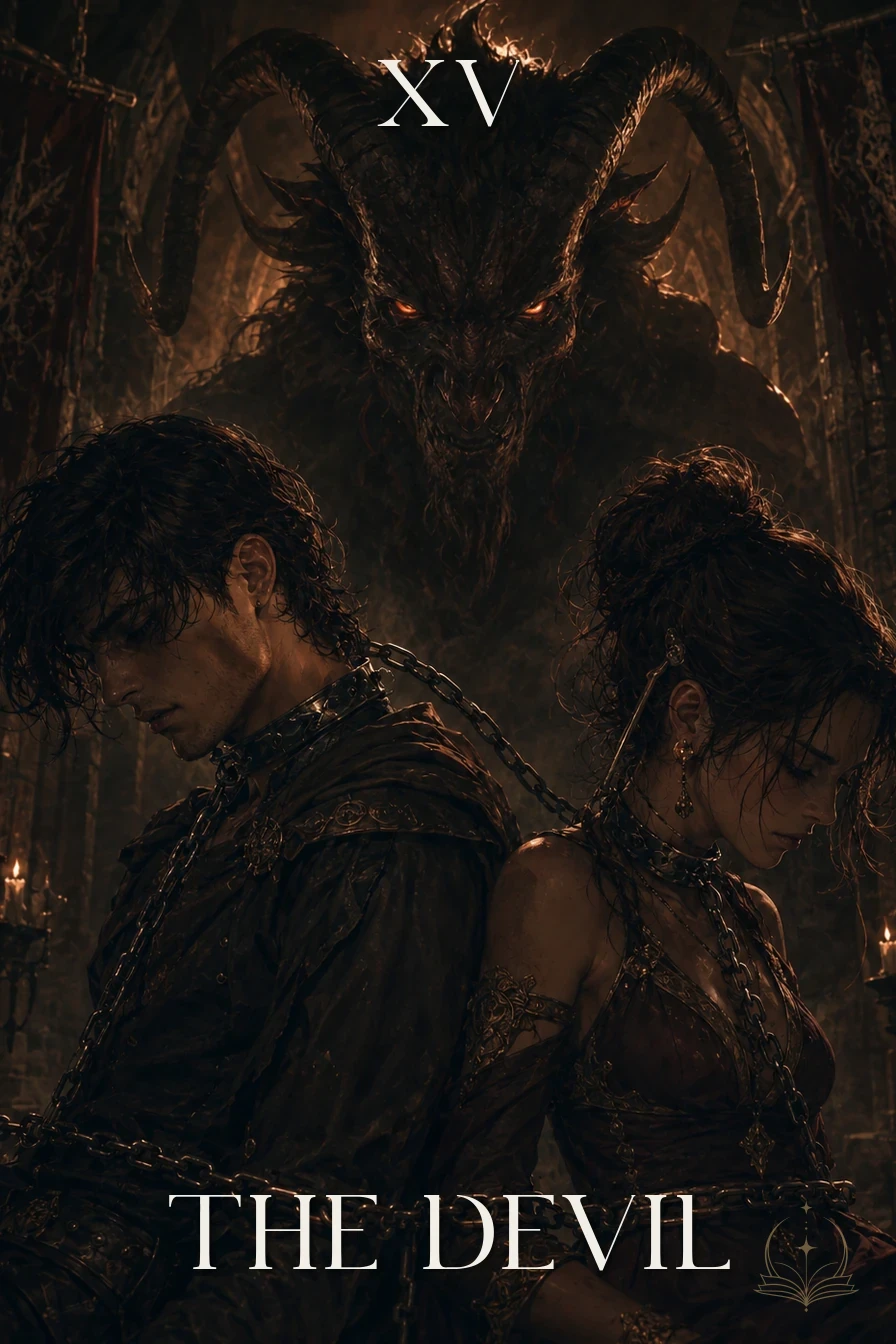
El Diablo habla de servidumbre, pero de un tipo específico: el que en parte mantiene el propio encadenado. La sombra de Capricornio aquí es el apego excesivo a la seguridad material, el estatus o el apetito que se vuelve gradualmente compulsivo; la carta rige la adicción, los patrones obsesivos y las maneras en que el placer o la comodidad pueden endurecerse hasta convertirse en una estructura que parece infranqueable. Es crucial que la iconografía tradicional muestre de manera consistente que el cautiverio no es absoluto: las cadenas son lo bastante holgadas para quitárselas. La carta plantea entonces la pregunta de qué obtiene uno del arreglo y qué costaría salir de él, una pregunta más honesta que la simple condena moral.
Imagery
El Diablo suele representarse como una gran figura cornuda —con frecuencia un Baphomet invertido— entronizada sobre dos figuras humanas encadenadas, que suelen mostrarse con colas y pequeños cuernos propios, sugiriendo que el cautiverio prolongado ha comenzado a darles forma. Las cadenas alrededor del cuello de las figuras son tradicionalmente lo bastante holgadas para deslizarse, un detalle que la carta pide a su lector que no pase por alto.
Reversed
Reversed, the Devil turns toward the loosening of its own chains. At its most hopeful the reversal is the moment of recognition — the bound figure noticing that the chains were always loose enough to remove, the addiction confronted, the compulsive pattern named, the first real step out of an arrangement that had felt inescapable. This is the card of reclaiming power that was given away. But the reversal carries a shadow reading too: a deeper denial, a refusal to admit the bondage at all, or a knowledge of the trap that still cannot translate into leaving it. Capricorn's shadow, inverted, can either be faced or driven further underground. Traditionally the card reversed presses the honest question the upright one raised — what is being gotten from the arrangement, and what would it actually cost to step out — and asks whether one is finally answering it or looking away again.
A reference, not a reading. This is the card on its own… a reading reads how it falls with the others.