Learn / Tarot / Cards / Swords / Tres de Espadas
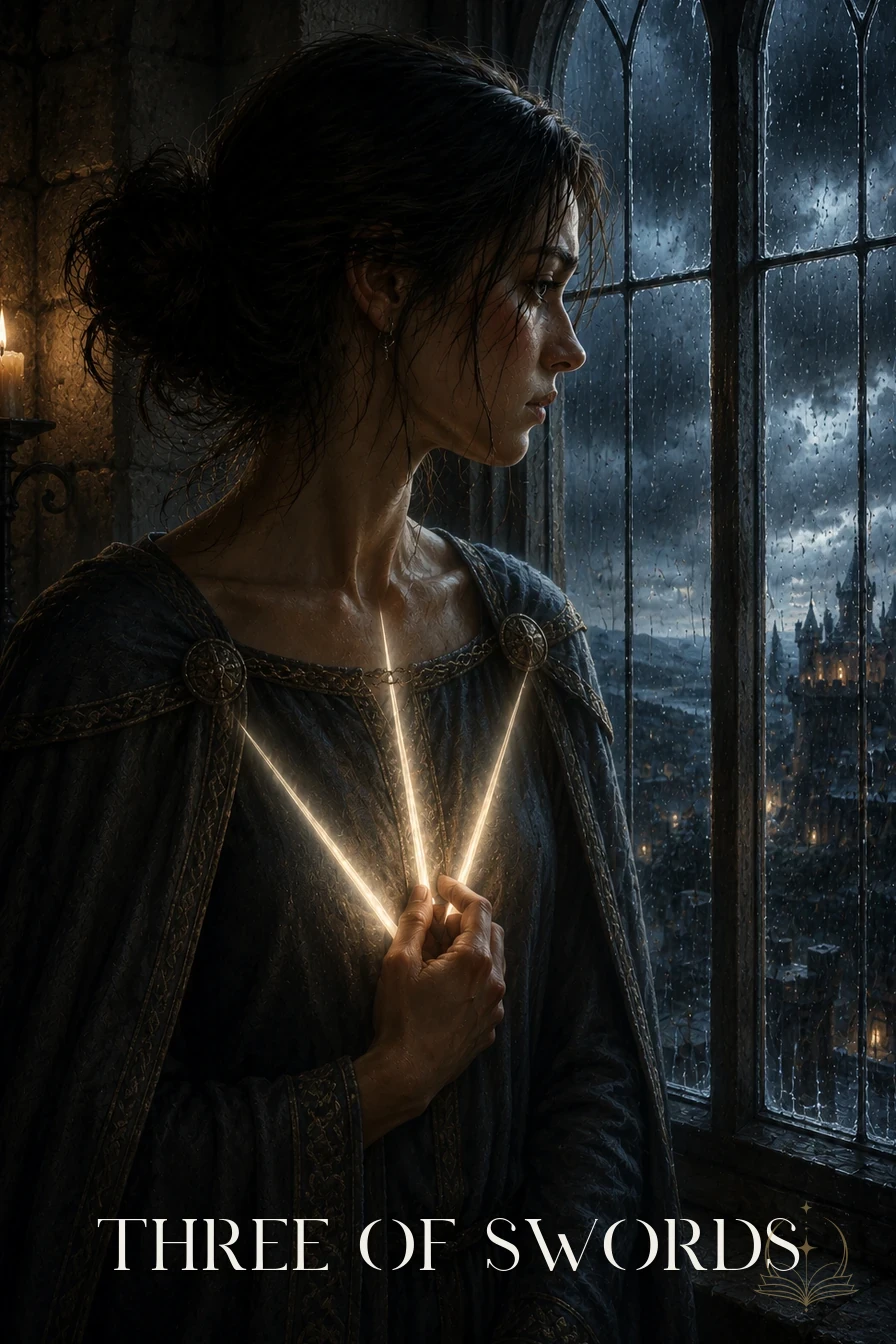
Tres de Espadas
El Tres de Espadas habla por tradición de la congoja y la pena — el dolor que llega con una verdad que uno preferiría no enfrentar. Es duelo, decepción, o la claridad descarnada de ver una situación de frente cuando la ilusión se ha disuelto. Aunque su talante es sombrío, la carta se lee convencionalmente menos como sufrimiento gratuito que como un corte necesario: el tipo de herida que, una vez sentida, permite que algo comience a sanar.
Imagery
Suele representarse como tres hojas atravesando un corazón único contra un cielo gris y cargado de lluvia. La tormenta se lee habitualmente como el clima emocional del momento, y las heridas como penas sentidas todas a la vez antes que en secuencia.
Reversed
Reversed, the Three of Swords turns on the heartache of the upright card. In the more hopeful reading, the blades are withdrawn — the sorrow begins to heal, forgiveness becomes possible, the painful truth has been felt and is loosening its grip. In the harder reading, the grief is being repressed or clung to: a hurt nursed long past its time, pain held onto as identity, the refusal to let a wound close. Traditionally the card reversed asks whether one is recovering from a sorrow or rehearsing it, and counsels the difference between honoring a hurt and prolonging it.
A reference, not a reading. This is the card on its own… a reading reads how it falls with the others.